USCIS Stricter Public Charge Rule 2026: Impact on Indian Green Cards
Visa & Immigration desk
NRI Herald • July 17, 2026
3 min read
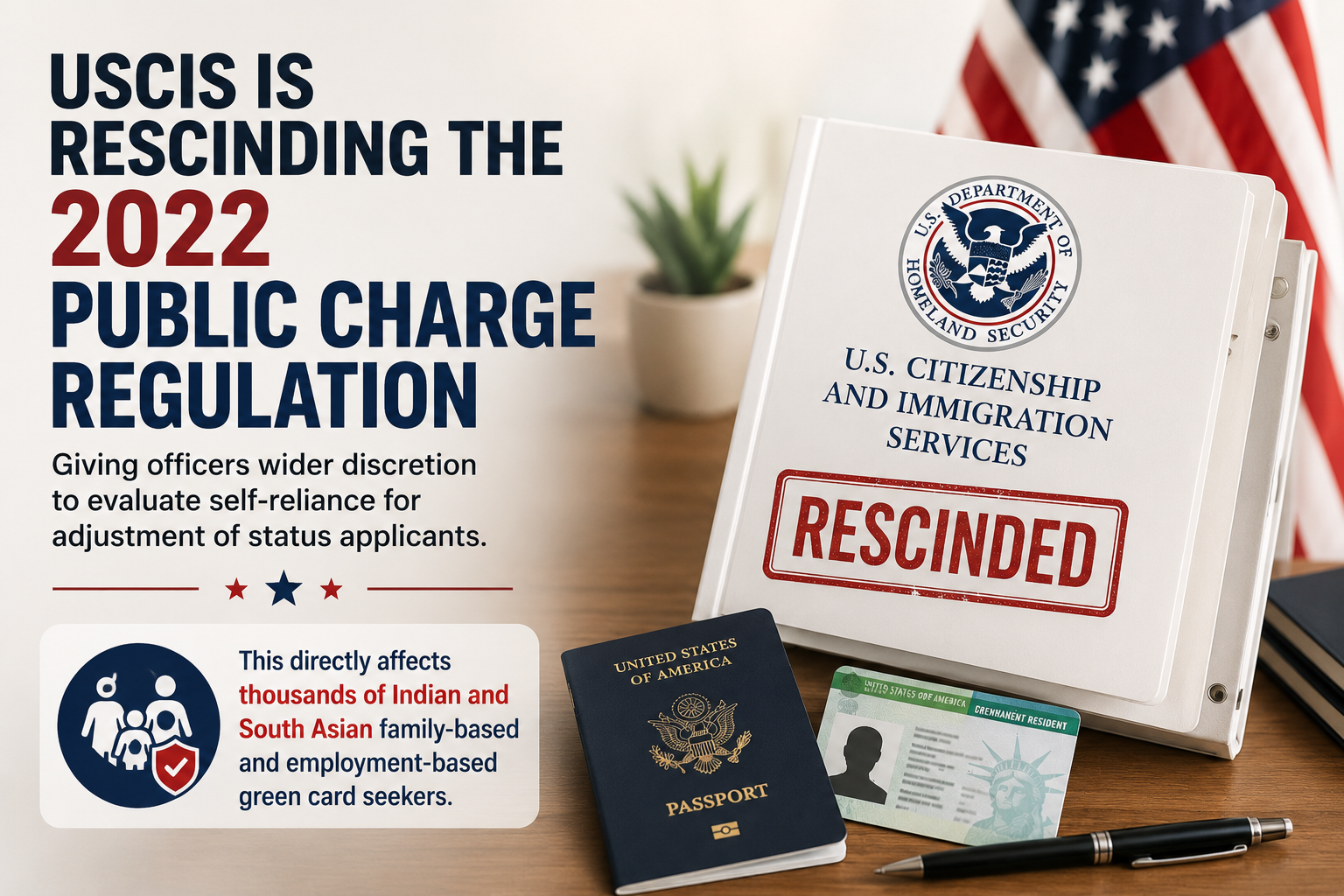
The policy change, announced in early 2026, replaces the 2022 regulation that had limited the use of public benefits as a negative factor. Under the new guidance, immigration officers may consider receipt of Medicaid, food stamps, housing vouchers, or other non-cash benefits as part of a broader assessment of whether an applicant is likely to become a public charge.
Indian nationals, who represent the second-largest group of green card seekers after Mexicans, are expected to feel the impact acutely. Many Indian applicants adjust status through employment-based categories, often after years on H-1B visas, and may have used public benefits during periods of job loss or family medical emergencies.
The rule applies to adjustment of status applications filed on or after the effective date. USCIS officers will weigh the applicant's age, health, family status, assets, resources, and financial status, along with any past or current receipt of public benefits. The agency emphasized that no single factor will be determinative, but the cumulative assessment gives officers broad latitude.
Immigration attorneys have advised clients to avoid using public benefits if they plan to apply for a green card. Some have recommended documenting private health insurance, savings, and family support to demonstrate self-sufficiency. The change does not affect U.S. citizens or most humanitarian visa holders.
The rescission follows a broader trend of tightening immigration policies under the current administration. Advocacy groups have criticized the rule as creating a chilling effect on benefit use among eligible immigrants, while supporters argue it upholds the principle of self-reliance enshrined in immigration law since the 1990s.
Highlighted words show why each story was matched
NRI Herald • July 17, 2026
NRI Herald • July 18, 2026
NRI Herald • July 17, 2026
NRI Herald • July 16, 2026